What Is a Large HMO Mortgage?
Understand specialist mortgage options for six-bedroom and larger shared properties, including lender criteria, rental affordability and valuations.

What Mortgage Criteria Apply to a Large HMO?
With Large HMO mortgages they are assessed differently by different lenders. A six-bedroom shared property may fall within one lender's specialist HMO range, while properties with seven, ten or more rooms may need a lender with a wider property policy.
The key factors include the number of lettable rooms and actual occupants, landlord experience, communal facilities, tenancy agreements, licensing and the rental valuation. These requirements are not interchangeable, and the legal definition of an HMO is separate from the lender's mortgage classification.
See our small HMO criteria guide or compare current HMO mortgage rates.
Most Buy-to-Let Mortgages are not regulated by the Financial Conduct Authority
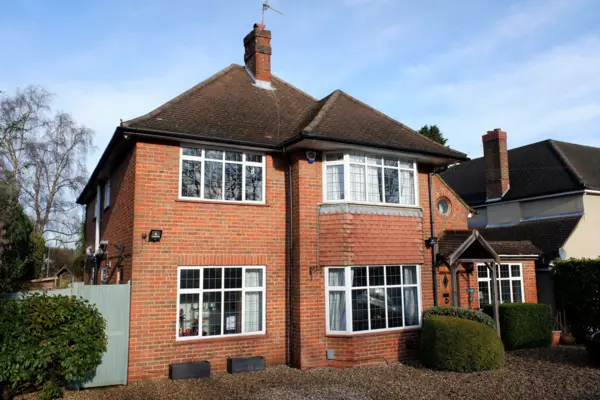
The property layout affects lender choice
Some specialist lenders consider six-bedroom HMOs, while others accept much larger properties. The number of rooms, kitchens and tenancy arrangements can all influence eligibility.
When Is an HMO Considered Large?
For mortgage purposes there is no single large-HMO bedroom threshold used by every lender. Some specialist ranges cover five to seven lettable rooms; others consider up to six beds or much larger buildings with up to twenty rooms. The actual number of tenants, the property's configuration and the valuer's assessment can also affect eligibility.
In England, mandatory HMO licensing generally applies to properties occupied by five or more people forming at least two households and sharing facilities. Additional local licensing and planning rules may apply. This licensing threshold does not determine which mortgage product a lender will offer. Rules differ across UK nations.
Example 1: Specialist HMO Lending for Five to Seven Lettable Rooms
One established buy-to-let lender treats properties with five or more occupants, or five to seven lettable rooms in a suitable multi-let area, as HMOs for lending purposes. The valuer ultimately determines the classification.
Landlord experience
For some purchase applications from non-portfolio landlords, the lender may require either two years' ownership and letting experience with a BTL property or one year's ownership and letting experience with an HMO. Experience validation is not required for remortgages or borrowers treated as portfolio landlords under this policy.
Property and tenancy criteria
Single or multiple tenancy agreements are accepted. The property must have no more than four habitable storeys, only one kitchen and suitable communal living accommodation. A sufficiently large open-plan kitchen/living area may qualify. More than one self-contained unit under one title is not acceptable under this HMO policy.
Valuation and affordability
A specialist security valuation is required and the lender assesses rent on a multi-tenanted basis. Its published HMO interest coverage ratio is 175%, regardless of the applicant's tax status. Its published maximum loan is £750,000 at 65% LTV and £500,000 at 75% LTV, subject to product and applicant conditions.
For example, a £200,000 interest-only mortgage stressed at an illustrative 5.5% would require £19,250 annual rental income at 175% cover, equivalent to approximately £1,604 per month. This is a simplified illustration, not a lender affordability decision.
Licensing and energy performance
A relevant licence, or acceptable evidence of an application where permitted, is needed. The property must meet current room-size and other applicable standards. The lender requires a valid EPC rated E or better for HMO applications and does not accept HMO EPC exemptions.
Example 2: Six-Bedroom HMOs and Some First-Time Landlords
Another specialist lender accepts HMOs with up to six beds, subject to the property's condition, location, valuation and the applicant's circumstances.
Landlord experience and income
Experienced landlords can apply, but some first-time landlords may also be considered where the applicants' combined income exceeds £75,000. Further applicant and homeownership conditions can apply; the income threshold alone does not establish eligibility.
Communal space and property restrictions
A communal room is required, although a living/dining kitchen can be acceptable. Bedsit-style shared accommodation and new-build HMO properties are not accepted under the published policy. The lender also requires adequate local demand for HMO accommodation.
Licensing and borrowing
The lender requires an HMO licence to be in place at completion, or an application within 30 days after completion under its stated policy. HMOs in a selective licensing area are excluded. Its published maximum loan for this specialist proposition is £750,000; the actual loan and LTV depend on the selected product and underwriting.
This approach illustrates why an applicant who does not meet one lender's experience criteria may still have options with another.
Example 3: Larger HMOs With Up to Twenty Rooms
A specialist landlord lender publicly considers HMOs with up to twenty rooms, as well as multi-unit blocks and some mixed HMO/MUB buildings. Its property policy can accommodate multiple kitchens, locks on bedroom doors and single or multiple tenancy agreements.
This can be relevant for larger converted houses and more complex shared accommodation that would fall outside lenders requiring one kitchen or a maximum of six or seven rooms.
However, a larger room allowance does not guarantee approval. Experience, valuation, licensing, construction, title, rental demand, borrowing limits and product-specific conditions still need individual assessment. We have not assumed a fixed experience threshold or rental valuation method for this example without confirming the applicable product criteria.
How the Three Large HMO Lending Approaches Compare
| Criteria | Example 1 | Example 2 | Example 3 |
|---|
| Property size | 5–7 lettable rooms or 5+ occupants under lender definition | Up to 6 beds | Up to 20 rooms |
|---|
| Landlord experience | Purchase experience rules; exceptions for remortgage/portfolio | Some first-time landlords considered | Case and product dependent |
|---|
| Separate tenancies | Accepted | Confirm for specific product | Accepted |
|---|
| Kitchens | One kitchen only | Communal living/dining kitchen can qualify | Multiple kitchens considered |
|---|
| Rental assessment | Multi-tenanted rental valuation; 175% ICR | Subject to product affordability | Subject to specialist assessment |
|---|
| Licensing | Appropriate licence or accepted application evidence | Licence at completion or apply within 30 days; selective licensing exclusion | Relevant licensing and underwriting checks |
|---|
These are anonymised examples of different published policies, not guaranteed offers. Maximum rooms, occupants, LTV and loan size must be checked against the specific product and current criteria.
How Do Rental Stress Tests Affect Large HMO Borrowing?
Large HMO lenders may assess the combined achievable rent from individual rooms rather than a single-family rental figure. The lender then applies an interest coverage ratio (ICR) to the interest calculated at its stress-test rate. A higher ICR can reduce borrowing even where the property produces strong rental income.
For example, one specialist HMO lender uses 175% ICR for all HMO applications, including limited-company borrowers, regardless of tax status. Other specialist lenders use different ICRs, including 130% or 145% in particular circumstances. The familiar 125% limited-company standard BTL assumption must not be applied automatically to large HMOs.
What monthly rent would a £200,000 mortgage need?
| ICR | Illustrative application | Minimum monthly rent |
|---|
| 125% | Some basic-rate / limited-company standard BTL | £1,042 |
| 130% | Some specialist HMO lending | £1,083 |
| 145% | Some higher-rate taxpayer assessments | £1,208 |
| 160% | Higher-rate standard BTL at some lenders | £1,333 |
| 175% | Specialist HMO example, regardless of tax status | £1,458 |
Illustrative only: £200,000 interest-only loan × 5% stress rate × ICR ÷ 12, rounded to the nearest pound. These are examples of different lender policies, not a single lender's rate card or an indication of the amount you can borrow.
Which mortgage interest rate is used in the calculation?
The stress-test rate is not necessarily the rate the borrower pays. Some five-year fixed products are assessed using the product pay rate, sometimes subject to a lender's minimum rate. Shorter fixes, including one- and two-year products, can be tested at the higher of a specified minimum (for example 5.5%) and the product rate plus 2 percentage points. These are examples of lender approaches, not a universal rule; purchase, remortgage, LTV and product conditions may change the calculation.
At 175% ICR, a £200,000 loan would require about £1,458 per month at a 5% stress rate, but £1,604 per month at 5.5%. The stress rate and ICR must both be checked before comparing the maximum loan available.
For example, six rooms at £450 per month would generate £2,700 gross monthly rent if fully occupied. A valuer may use a lower eligible figure, and lender calculations can restrict the loan even when gross rent appears sufficient.
See our limited-company buy-to-let mortgage guide and rates for further comparisons. Company structure, tax position and product eligibility should be considered together rather than choosing on ICR alone.
Rental stress tests can limit borrowing
A large HMO may produce strong room rents, but lenders apply their own valuation basis, stress rate and interest coverage ratio when calculating the maximum mortgage.
What Else Can Affect Large HMO Mortgage Eligibility?
Planning, licensing and room sizes
Local licensing and planning requirements should be checked before buying or converting a property. In England, an Article 4 direction may remove permitted development rights for certain HMO conversions. Lenders can reject properties with inadequate room sizes even where a licence has previously been granted.
Communal facilities and property configuration
One lender may insist on a single kitchen and communal lounge, while another considers multiple kitchens and locks on bedroom doors. Buildings containing self-contained flats may need MUB or mixed-property lending rather than a conventional HMO product.
Individual or limited-company borrowing
Some lenders accept HMO applications from limited companies, while others have different product ranges or company-structure requirements. The same property may attract different affordability calculations depending on the applicant and lender.
Mortgage rates and product fees
A lower initial rate is not always the cheaper mortgage. Arrangement fees, initial-rate length, valuation fees and early repayment charges matter. Compare the total cost over equivalent periods rather than comparing products with different fixed-rate lengths as if they were identical.
Large HMO Mortgage FAQs
What counts as a large HMO for mortgage purposes?
Lenders use different definitions. Some assess five to seven lettable rooms as HMOs, while specialist lenders may consider buildings with twenty rooms. The legal HMO and licensing definitions are separate.
Can I get a mortgage on a six-bedroom HMO?
Yes, subject to the number of occupants, layout, licensing, valuation, landlord experience and product criteria. Several specialist lenders consider six-bedroom HMOs.
Do I need landlord experience for a large HMO mortgage?
Requirements vary. Some lenders require a track record for particular purchase applications, while others consider some first-time landlords subject to income and other conditions.
Can a large HMO have separate tenancy agreements?
Yes, some lenders accept multiple agreements. Others may impose different conditions, so the precise tenancy arrangement should be checked before applying.
Can a large HMO have more than one kitchen?
Some specialist lenders consider multiple kitchens, while others require only one. The property must meet the lender’s valuation and security requirements.
How do lenders calculate borrowing for a large HMO?
Lenders may assess multi-tenanted rental income using an interest coverage ratio and mortgage stress rate. The valuation, loan to value and applicant circumstances affect the maximum loan.
Can a limited company obtain a large HMO mortgage?
Yes, some lenders accept limited-company applicants, subject to company structure, underwriting and property criteria.
Your home may be repossessed if you do not keep up repayments on your mortgage
