Small vs Large HMO Mortgages
Compare the lending differences between smaller shared properties and larger specialist HMOs, including valuations, affordability and landlord experience.

What Is the Difference Between a Small and Large HMO Mortgage?
The main difference when comparing small vs large HMO properties is which lending criteria they meet. Some three-, four- and five-tenant shared properties can qualify for standard buy-to-let (BTL) mortgages. Larger or more complex HMOs generally require specialist products. There is no single bedroom threshold used by every lender.
Mortgage classifications are not the same as legal HMO definitions. In England, an HMO generally involves at least three people from more than one household sharing facilities; mandatory licensing generally starts at five occupiers, with additional local schemes possible. Rules differ elsewhere in the UK.
For more detail, see our Small HMO Mortgage Criteria and Large HMO Mortgage Criteria guides.
Most Buy-to-Let Mortgages are not regulated by the Financial Conduct Authority
Property size is only part of the decision
Some smaller HMOs can qualify for standard buy-to-let lending, while larger or more complex properties often need specialist products. Occupancy and tenancy arrangements matter too.
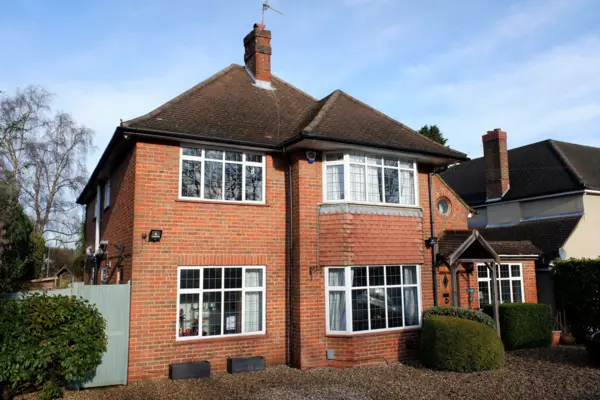
Small vs Large HMO Mortgage Criteria Compared
Comparing small vs large HMO mortgages helps explain why similar properties can qualify for different mortgage products. The table compares common lending approaches, not universal lender rules. The number of occupiers can matter as much as the number of bedrooms.
| Criteria | Smaller HMO / standard BTL | Larger HMO / specialist mortgage |
|---|
| Typical occupancy | Some lenders accept up to 4 or 5 tenants | Often 5–6+ occupants; some lenders accept 10, 12 or 20 rooms |
|---|
| Mortgage range | Standard BTL may be available if criteria are met | Specialist HMO products usually required |
|---|
| Tenancy agreements | Some lenders require one joint agreement; others permit room agreements | Separate room tenancies may be acceptable |
|---|
| Rental valuation | Some lenders assess the lower of actual rent and single-household rent | Multi-tenanted rental assessment may be available |
|---|
| Rental stress test | Standard BTL ICRs may apply, such as 125% or 145% | Specialist ICRs vary; 130%, 145% and 175% are examples |
|---|
| Valuation fee | Standard BTL fee or free valuation on selected products | Specialist fees can be substantially higher; some products include free valuation |
|---|
| Landlord experience | Standard BTL eligibility and experience rules | May require HMO or landlord experience; some exceptions exist |
|---|
A five-bedroom property with five occupiers may fit one lender's standard BTL rules but another lender's specialist HMO range. A six-bedroom or eight-bedroom property is more likely to require specialist underwriting.
Are Large HMO Mortgage Valuation Fees More Expensive?
Often, yes. A standard BTL mortgage may require a conventional investment-property valuation. A specialist HMO mortgage may require a more detailed inspection and assessment of room rents, layout, condition and the property's suitability as security. This can make the valuation more expensive, even where the loan amount is similar.
Why the difference matters
For example, previously published valuation schedules for one lender showed £340 for a standard BTL valuation and £670 for an HMO valuation on a property valued at £300,000. Another lender's schedule showed a free standard BTL valuation but a £745 HMO valuation fee at the same property value. These figures illustrate how the fee structures can differ; they are not current fee quotations and must be checked against the selected product and lender's latest fee scale.
Compare the full cost: A mortgage with a slightly lower initial rate can be more expensive overall if it carries a higher valuation fee, arrangement fee or other upfront charges. Conversely, some specialist HMO products offer a free valuation, subject to product terms. Free valuation does not necessarily mean every valuation-related cost is covered.
Valuation fee schedules can depend on property value, geography, property type, lender panel and whether additional specialist reports are needed. Check the precise fee and what is included before applying.
How Rental Stress Tests Change HMO Borrowing
The interest coverage ratio (ICR) is the percentage of stressed mortgage interest that the lender expects the assessed rental income to cover. Standard BTL examples include 125% for basic-rate taxpayers or some limited companies and 145% for higher-rate taxpayers. Other lenders use different ratios, including 160% for higher-rate borrowers. Specialist HMO lending can require 175% regardless of tax status.
Being a limited company does not guarantee a 125% ICR if the mortgage is assessed under specialist HMO criteria.
Minimum monthly rent on a £200,000 interest-only mortgage
| ICR | Monthly rent at 5% stress rate |
|---|
| 125% | £1,042 |
| 130% | £1,083 |
| 145% | £1,208 |
| 160% | £1,333 |
| 175% | £1,458 |
Illustrative calculations: £200,000 × 5% × ICR ÷ 12, rounded to the nearest pound. This is not a borrowing quotation; lender rent valuations and minimum stress rates may differ.
The stress-test interest rate also matters. Some five-year fixed products can be assessed using the product pay rate, subject to minimum rates. Shorter fixes may use the higher of a minimum such as 5.5% or the product rate plus two percentage points. These are lender-specific approaches, not universal rules. At 175% ICR and 5.5% stress rate, the same £200,000 loan needs approximately £1,604 monthly rent.
See our limited-company BTL rates and criteria for more on how applicant structure affects borrowing.
Compare the total borrowing cost
A specialist HMO may involve different valuation fees and rental stress tests. Compare product fees, assessed rent and lender criteria alongside the initial mortgage rate.
Which Mortgage Might Suit a Four-, Five-, Six- or Eight-Bedroom HMO?
Four bedrooms
A property occupied by four unrelated tenants may qualify for standard BTL with some lenders, including certain arrangements with separate room agreements. The rental valuation method still matters.
Five bedrooms
A five-tenant property may be accepted on standard BTL where one joint tenancy agreement is in place and the lender's other conditions are met. Another lender may require specialist HMO finance.
Six bedrooms
Specialist HMO lending is usually the starting point. The lender will consider the number of occupiers, room sizes, communal facilities, licensing, landlord experience and valuation.
Eight bedrooms
A lender offering larger HMO products is generally needed. The valuation basis, specialist fee scale, portfolio exposure and HMO experience can become especially important.
These examples assume bedrooms are occupied by tenants and are not a substitute for the lender's full criteria.
Small vs Large HMO Mortgage FAQs
Is a five-bedroom HMO a small or large HMO?
It depends on the lender and the number of occupiers. Some lenders accept five tenants on standard buy-to-let if tenancy conditions are met; others require specialist HMO lending.
Does a six-bedroom HMO always need a specialist mortgage?
Six-bedroom shared properties usually fall outside standard buy-to-let occupancy limits, but each lender applies its own criteria.
Are large HMO mortgage valuation fees higher?
Often, where the lender requires a specialist HMO valuation rather than a standard buy-to-let valuation. Some products include a free valuation, so check the individual mortgage offer.
Can a limited company HMO use a 125% rental stress test?
Sometimes, but not automatically. Specialist HMO products may apply higher interest coverage ratios even when the borrower is a limited company.
Does HMO licensing determine which mortgage is needed?
No. Licensing, planning and mortgage lender classifications are separate. A licensed property may still qualify for standard buy-to-let with some lenders.
Are room rents always used to assess HMO borrowing?
No. Some standard buy-to-let lenders use a single-household market rent, while specialist HMO lenders may consider multi-tenanted rental income, subject to valuation and affordability rules.
Your home may be repossessed if you do not keep up repayments on your mortgage
